
This is part 1 of a storyline about the quest for Jan van Boeckel
Relevant links: Introduction and part 2
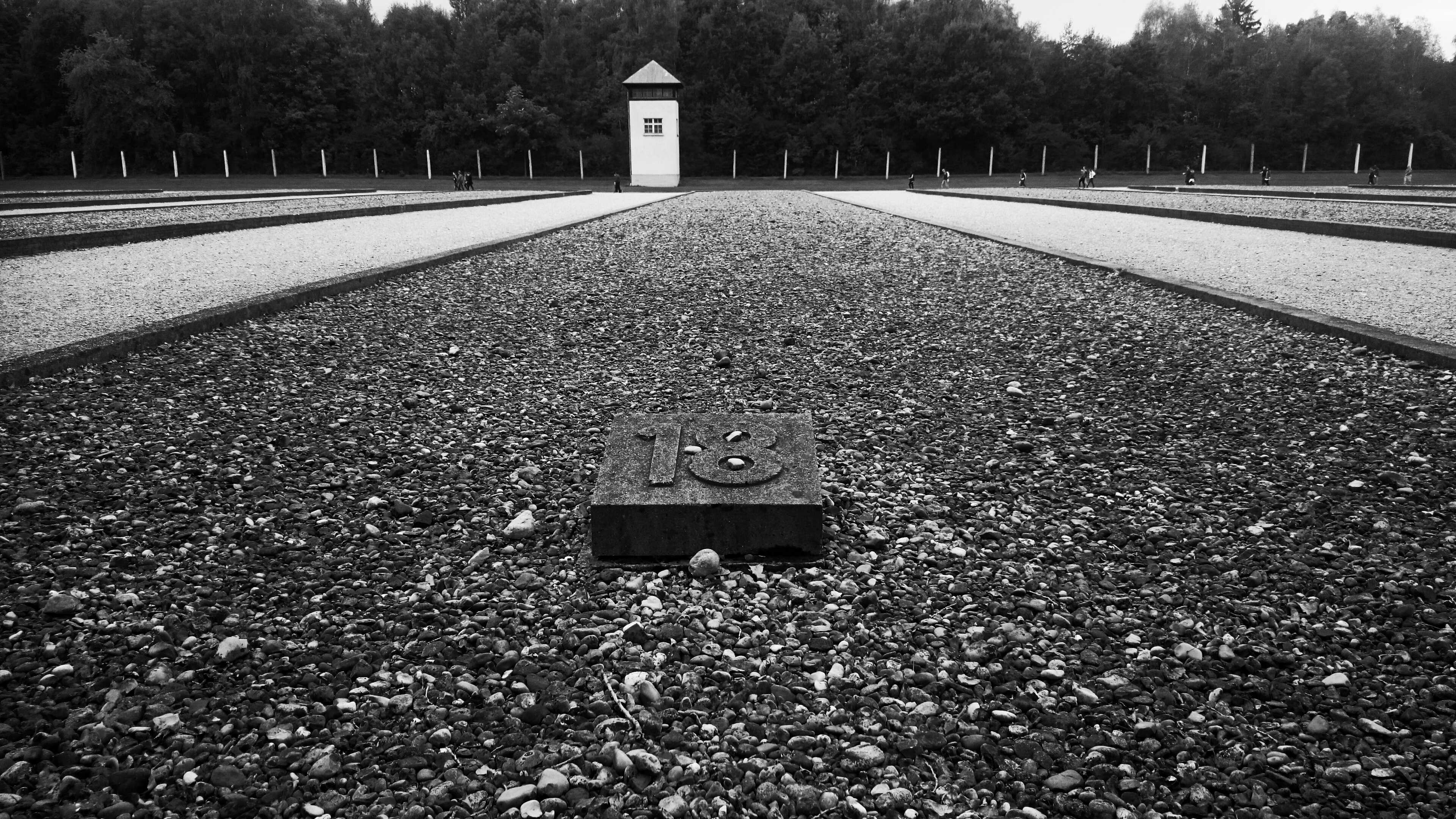
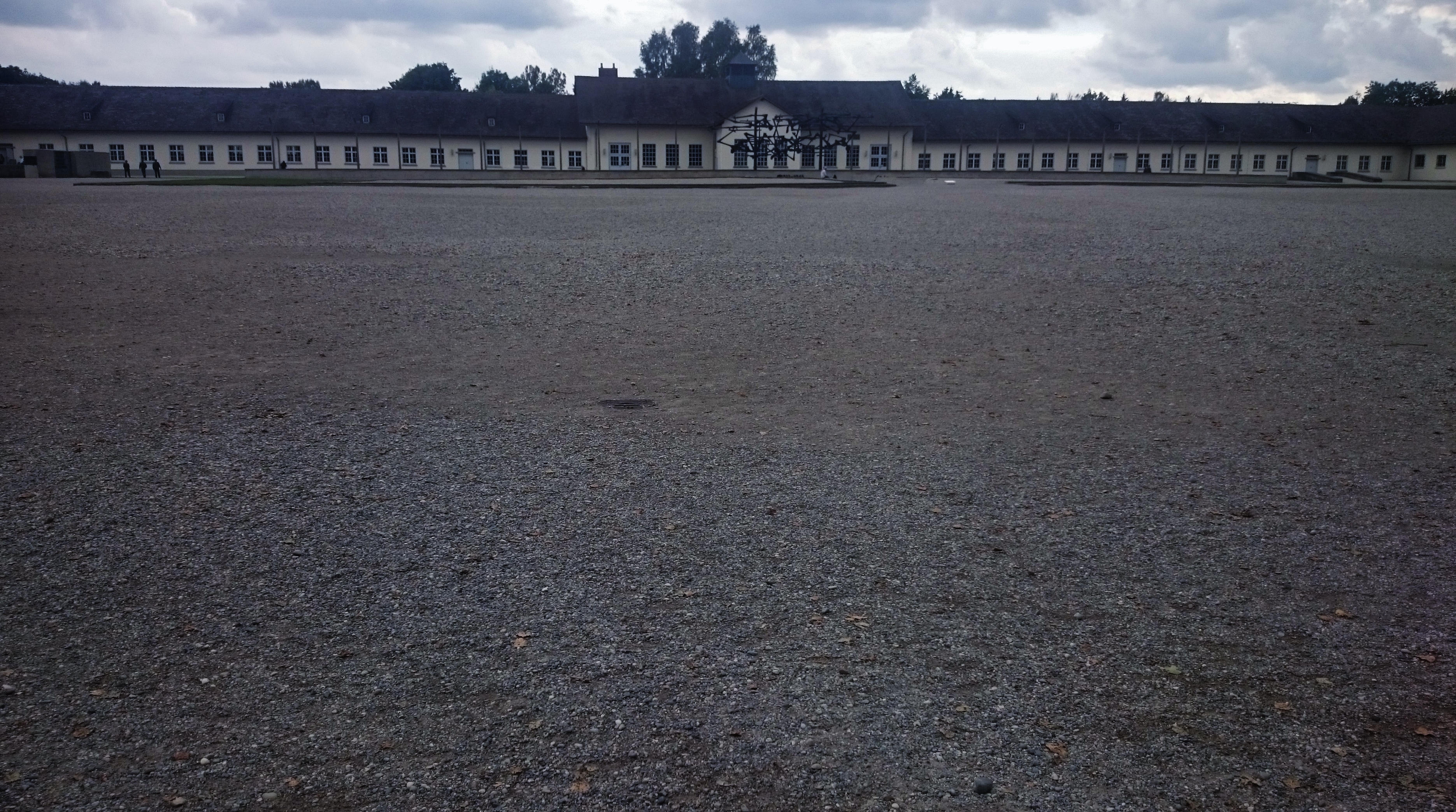
Dachau is a place that can not really be described, and I’m not going to try. But seeing the vast roll-call space, let alone the registration building, execution area, gas chamber and ovens is enough to set your hair on end. Yes, it is real. It really happened. And what happened is beyond my imagination. And that hits home as I walk through the gate with the well known horrific slogan ‘Arbeit macht frei’. That first impact, and the feeling of walking amongst ghosts will stay with me. And then to think my uncle might have been there.
Initially I went to Dachau as a gesture of respect to my uncle, who died when he was 22 years old at the hands of the Nazis in Germany. And I left Dachau with an incredible urge to find out how much really was known about his fate. That is the quest I am on at the moment.
My mother had a picture of him and I used to study it as a child, wondering about him and his fate. His name was Jan, sometimes known as Jean. I only knew that he had died, maybe at Dachau or maybe Flossenbürg, or maybe in between and that he was a ‘missing person’ after the war. He was forced to work for the German occupier in Holland and at a certain point went into hiding, joined the resistance and got caught. And then disappeared into thin air.
Some very sobering information I gleaned at Dachau turned out to be part of the reason why so little was known about the fate of my uncle. We have all heard of the big concentration camps like Auschwitz, Mauthausen, Buchenwald, Dachau, Flossenburg and many more. But the Nazi penal system was set up in such a way that these main camps had very many sub-camps. Dachau, for example, had at least 100 sub-camps or ‘Kommandos’. A reasonably accurate estimate of the number of camps, prisons, ghettos and any other place where the Nazis (and their allies) imprisoned, enslaved, detained, persecuted or murdered their victims has only been available since 2013. In 1999 the Holocaust Memorial Museum started compiling an Encyclopedia of Camps and Ghettos, 1933–1945. A complete inventory of this information had never
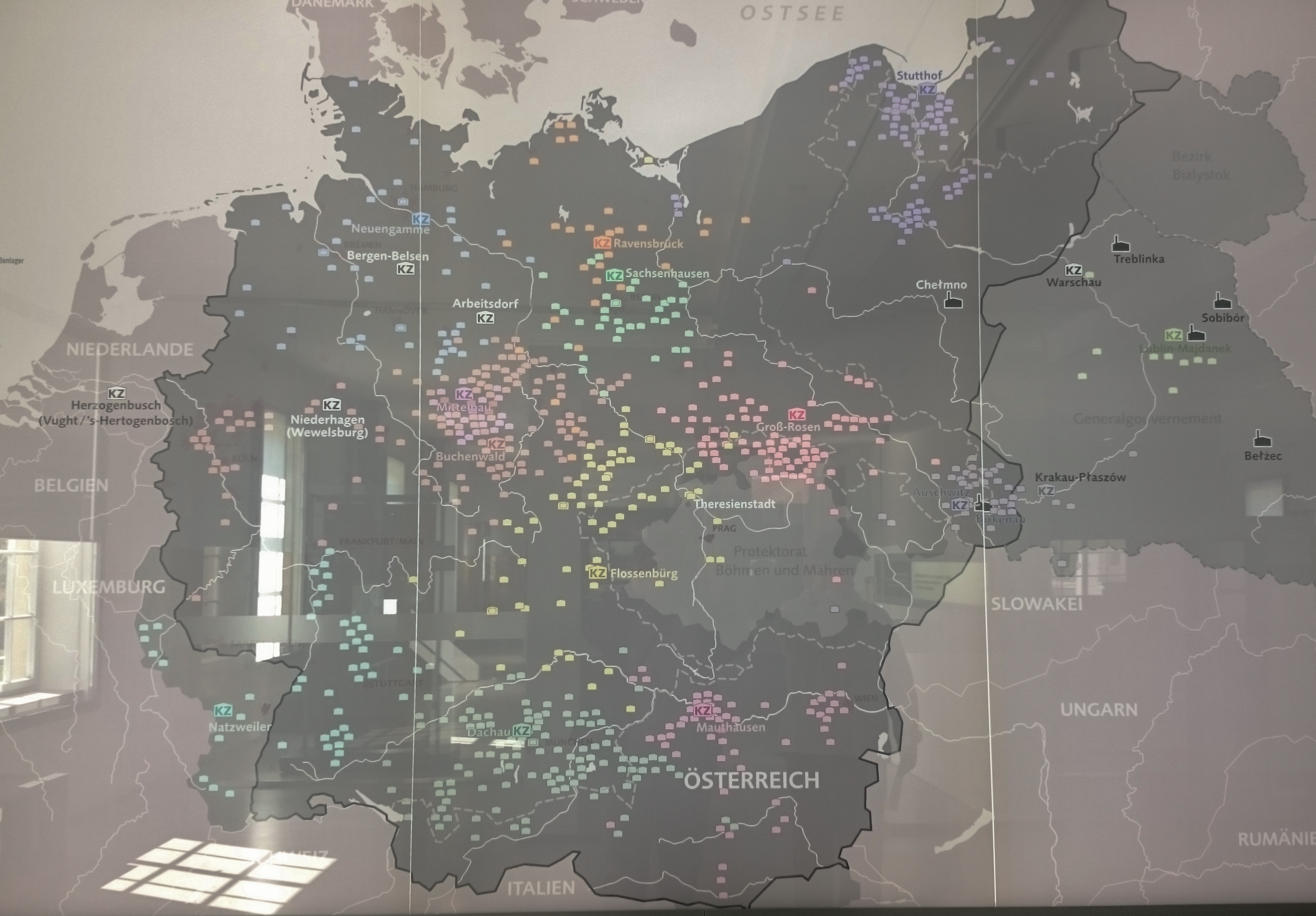
been done as information was geographically scattered and in several different languages. The researchers started off expecting to find around 7. 000. After 13 years of research, gathered from over 400 organisations, the total number turned out to be a staggering 42.000. The New York Times describes this in an article aptly named The holocaust just got more shocking. When these sub-camps are drawn onto the map of Europe Germany and Poland disappear under the multitude of dots. I wrote about one of these sub-camps of concentration camp Natzweiler-Struthof in Frankfurt in the blog post Silent Witnesses.
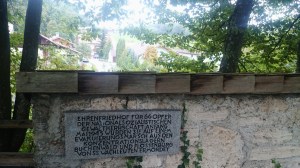
And there is another bit of insight I gained at Dachau which made me aware of the memorials at many places we later visited in Bavaria. The magnitude and total senselessness of the death marches. In spring 1945 the SS ordered many of their prisoners, only shadows of whom they used to be, to walk southwards away from the advancing Allies, away from liberation. Travelling from Dachau to the Bavarian lakes and later northwards we saw many spots these marches passed by or ended, leaving thousands either dead through starvation or by a bullet. I later learnt that these marches are a turn of events which make the search for my uncle’s fate even more difficult.
 The urge to find out more about Jan has in the meantime led me from Salzburg, to Flossenbürg, Amsterdam and Arnhem. I have gained an incredible amount of insight and now know that more generations have been on the same quest. But the search is not complete. I still have a lot of archives to go to, many internet searches to do and visits to make. I will write about the insights gained in the storyline ‘From Holland to Bavaria’, written to honour my uncle, Jan van Boeckel.
This is part 1 of a storyline about the quest for Jan van Boeckel
Relevant links: Introduction and part 2

 mogromo
Very valuable post. My husband’s extended family were murdered at Auschwitz. We still haven’t taken the trip. I don’t think he could, though. He can’t make it through a Holocaust movie. Actually, the novel that I’m writing has a lot of flashbacks to the Holocaust. The Nazis had two wars. They had the war against the Allies and the war against the Jews. They were determined to annihilate every Jew they could even if they lost WWII and even if it actually cost them WWII. (Because they were taking up some valuable resources to kill Jews that could have been spent on other things. And of course, by killing the Jews early on, they lost slave labor.) And so the death march was their final act of viciousness and sadism. But, as you say, the additional extremely disturbing point to note here is the ubiquitous presence of the camps which implies so much cooperation (often enthusiasm) by the civilians of all of those countries.
LikeLiked by 1 person
With thier machine-like evil organisation powers the Nazis also found the time and resources not to just get rid of freedom fighters and political opponents, but to lead them to a slow, excruciating death in darkness and fog. That is the story of my uncle that I am now blogging about.
LikeLiked by 1 person
How horrible. I will definitely be reading your blog– one of the only ones I’ll be reading. I’ve read a number of great partisan books. One I particularly liked was A Partisan’s Memoir by Faye Schulman. She got to be with and fight with the partisans rather even though a woman because she was a trained photographer and they wanted a photographer to document the war.
LikeLike
You might also like this particular post, again related to the Holocaust. http://kinneretstern.com/2014/12/23/chaim-soutine-background/
LikeLiked by 1 person
Thanks for following my blog, which is much appreciated. I have read your posts on First Night History.
Best wishes, Pete.
LikeLiked by 1 person